Small
Shih Tzu
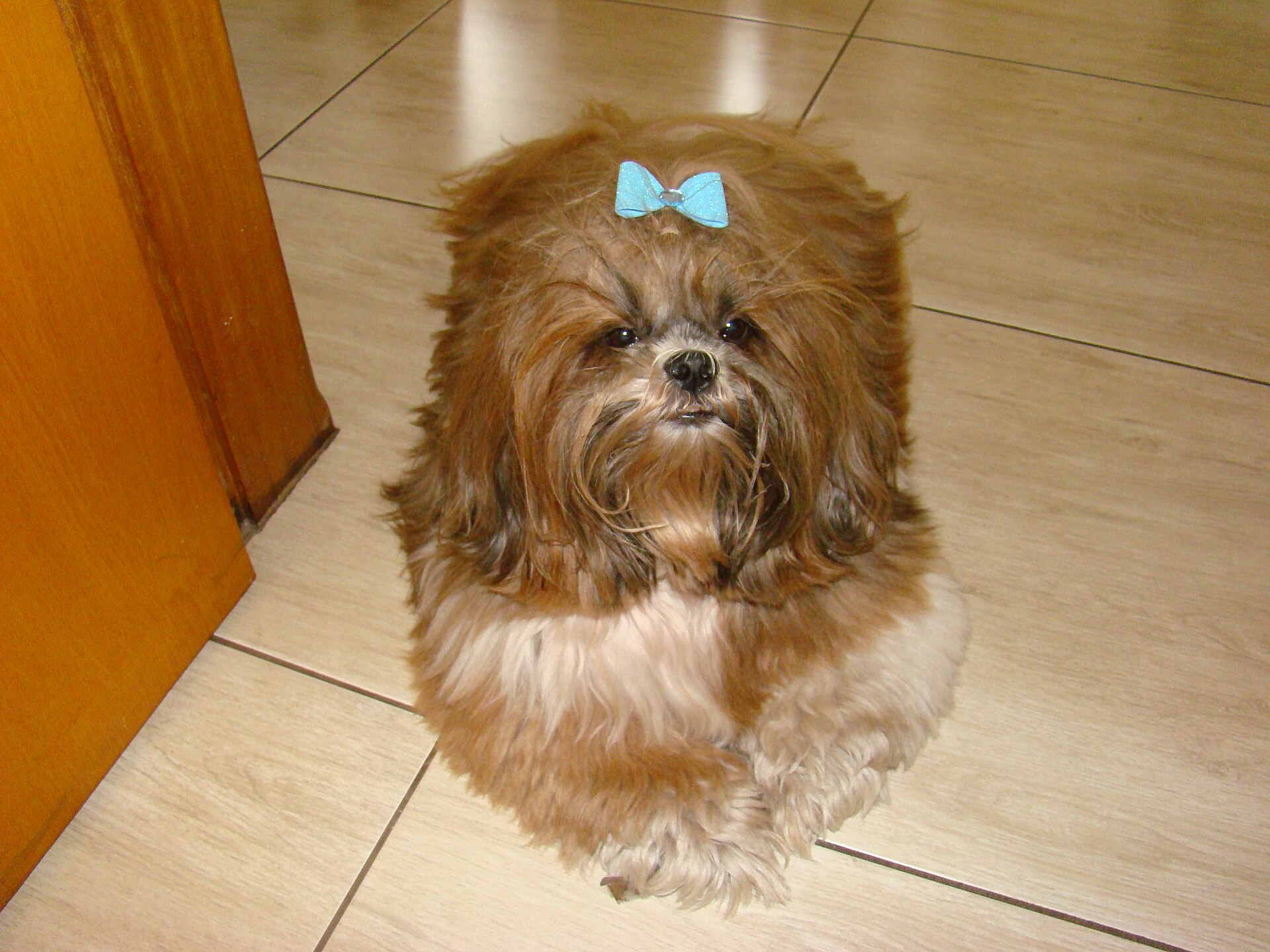
The Shih Tzu is a small companion dog with a long coat and a broad, round head. The FCI standard lists the origin as Tibet (China), with British patronage, and says the roots are in Tibet while the breed was developed in China.
The plush outline is why people group the Shih Tzu with “teddy bear” dogs. That is a description of the coat and head, not a breed name. The teddy bear dog breeds guide explains the difference.
Quick facts
- Height
-
FCI and the Royal Kennel Club: not more than 27 cm (10½ in) at the withers. Both say type must not be sacrificed to size alone. The AKC lists 9–10.5 inches.
- Weight
-
FCI and the Royal Kennel Club: 4.5–8 kg, with an ideal of 4.5–7.5 kg. The Kennel Club also prints those weights as 10–18 lb and an ideal of 10–16 lb. The AKC lists 9–16 pounds.
- Coat
-
Long, dense outer coat, not curly, with a moderate undercoat that is not woolly. A slight wave is allowed. Length must not restrict movement, and the hair must not stop the dog seeing. All colours are allowed in the FCI standard except merle. A white blaze and a white tail tip are highly desirable in parti-colours.
- Lifespan
-
10–18 years, as listed by the AKC.
- Origin
-
Tibet (China) in the FCI header. The historical summary says the breed was developed in China and was not recorded as an import to Britain until 1931.
Recognising the breed
The head is broad and round, wide between the eyes, with a definite stop. Hair on the muzzle grows upward and, with the beard and whiskers, creates the chrysanthemum face named in the FCI standard.
The FCI standard strongly recommends that the head hair be tied up, without adornment. The bow in the photograph is an accessory on that dog. It is not a breed requirement.
The body is longer from the withers to the root of the tail than the height at the withers. The standard calls the dog sturdy and abundantly coated, with a distinctly arrogant carriage. Sturdy is the point: the height cap does not describe a fragile, fine-boned dog.
The FCI historical note says people confuse the Shih Tzu with the Lhasa Apso and treats them as different breeds. This page does not describe the Apso.
Temperament and activity
The FCI standard says intelligent, active, and alert, and friendly and independent. The listed use is companion dog.
Friendly and independent can both be true, and neither tells you how a particular dog will behave with children, strangers, or other pets. The coat does not decide that.
“Active” on a dog under 27 cm is not the workload of a Wolfhound. Many Shih Tzus are satisfied with short walks and play. Some are not. The dog in the house is the evidence, not the breed page.
Grooming
A long, dense coat mats if it is only smoothed on the surface. It needs to be combed through to the skin. The standard also requires that hair not cover the eyes or restrict movement, so the face has to stay clear.
Tying the head hair up is the recommendation in the standard, and it says to do that without adornment. A shorter pet clip is a grooming choice. It does not create a different breed, and the coat grows back.
Similar breeds
-
Bichon Frise
The Bichon is a white dog with loose corkscrew curls. The Royal Kennel Club puts that coat at 7–10 cm (3–4 in) and allows a trimmed or untrimmed presentation. The Shih Tzu’s coat is long and not curly, and any colour except merle is allowed. Both can look round when the coat is full. The Shih Tzu’s muzzle hair grows upward; that chrysanthemum face is the clearer visual split.
-
Lhasa Apso
Named here only because the FCI Shih Tzu standard says the two are often confused and are separate breeds. Use the Shih Tzu’s own markers on this page: the upward muzzle hair, the long non-curly coat, and a height not over 27 cm. This site has no Lhasa Apso profile.
Discovery guides
Sources
- FCI breed standard No. 208, Shih Tzu (8 September 2026) Accessed 9 October 2026.
- The Royal Kennel Club breed standard, Shih Tzu Accessed 9 October 2026.
- American Kennel Club, Shih Tzu Accessed 9 October 2026.